

Architecture
A location that shapes the future
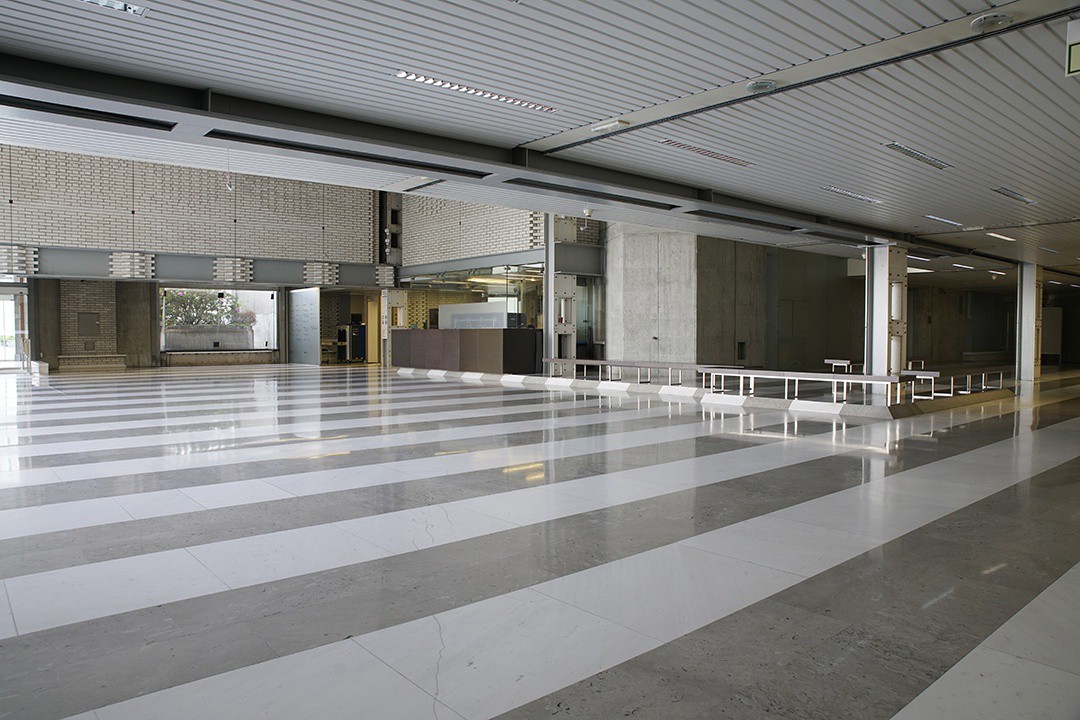
The TR3 skyscraper in the Republic Square is no ordinary skyscraper. Its avant-garde
triangular prism shape and location in the city centre, where the key urban planning,
economic and political decisions with long-term effects on the future of the nation are
made, is proof enough. The current situation is the same.
Architect Edvard Ravnikar won the tender for building a new national political centre
in 1960. The large complex, with a construction time of more than 20 years, deviated
considerably from the original concept. It has a main platform, two 12-floor skyscrapers
with a triangular ground plan, the long Maximarket mall building and the Cankar Hall.
The two striking Nova Ljubljanska Banka skyscrapers and TR3 with its distinctive tops
were finished in 1976. The TR3 skyscraper has a taller copper top and none of the
skyscrapers are as tall as the original concept intended them to be due to political
reasons of that time. The architect, who strived to design a representative square for
a metropolis and later received Prešeren and Plečnik awards for his work, gradually
added new elements to the original design, among other things the mighty Cankar
Hall building. The building, which was erected as an extension in 1983, was originally
intended to be used for events and socio-political assemblies, but eventually grew into
the largest national cultural and congress institution. The TR3 skyscraper remains one
of the most representative buildings of the Republic Square. The character of this
monumental urban area is as important to the centre as it is to the entire city. In
this prestigious centre of political and economic power, the futures of the country
and nation are being shaped.
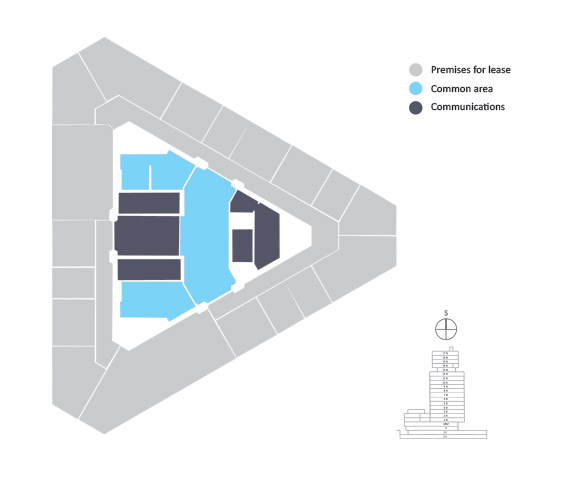
GROUND PLAN OF A TYPICAL FLOOR
the history of The Republic square
The Republic Square, once named Trg Revolucije ("Revolution Square"), is the largest
platform and square in Ljubljana. It is located west of the old city centre and east of
Tivoli Park. For many years it served as a public parking area, but after the renovations
were finished in 2014, the square regained its position as the main city and national
square. Near the Republic Square is the Plečnik Square and an underpass leading to
the Zvezda Park, the Congress Square and the medieval city centre.
In June 2014, The Republic Square was declared a cultural monument of national
importance due to its symbolic and national significance.
The wall of Emona (ancient Roman name for Ljubljana), several ancient buildings,
and later an early Christian settlement stood on the ground on which the Republic
Square was built. Archaeologists found several precious artefacts, which are now
kept on site in the City Museum of Ljubljana. In the 17th century, the counts of
Turjak (Auersperg) created a baroque garden in the then abandoned area. The
garden later belonged to the Ursuline Convent, subsequently widely known as
"the nunnery garden". A wall was built around the garden during both world wars.
After World War 2, the nunnery garden was nationalized. Between 1962 and 1982,
a large project to build part of the square and its surroundings in the area was
carried out. The work was managed by a group of architects under the leadership
of architect Edvard Ravnikar. In 1963 workers began building a car park, but the
project was temporarily halted in October 1964 due to shortage of funds. In 1965
an extension was added to the Jože Plečnik High School, followed by the Maximarket mall,
the Nova Ljubljanska Banka skyscraper with an extension and a platform in 1971.
In 1975 the nunnery garden area was renovated and a monument to the WW2
revolution was erected. The TR3 skyscraper with an extension was built in 1976.
The erection of the Cankar Hall began in 1979 and was completed in 1981.
On 26 June 1991, the independence of the Republic of Slovenia was declared during
a celebration on the Republic square. This celebration takes place on that square
every year to commemorate that event. The square was renovated in 2014, so that
only pedestrians could cross it and celebrations could be held there. The complete
renovation of the platform restored the main purpose of the square - serving as the
central city and national square.
importance due to its symbolic and national significance.
The wall of Emona (ancient Roman name for Ljubljana), several ancient buildings,
and later an early Christian settlement stood on the ground on which the Republic
Square was built. Archaeologists found several precious artefacts, which are now
kept on site in the City Museum of Ljubljana. In the 17th century, the counts of
Turjak (Auersperg) created a baroque garden in the then abandoned area. The
garden later belonged to the Ursuline Convent, subsequently widely known as
"the nunnery garden". A wall was built around the garden during both world wars.
After World War 2, the nunnery garden was nationalized. Between 1962 and 1982,
a large project to build part of the square and its surroundings in the area was
carried out. The work was managed by a group of architects under the leadership
of architect Edvard Ravnikar. In 1963 workers began building a car park, but the
project was temporarily halted in October 1964 due to shortage of funds. In 1965
an extension was added to the Jože Plečnik High School, followed by the Maximarket mall,
the Nova Ljubljanska Banka skyscraper with an extension and a platform in 1971.
In 1975 the nunnery garden area was renovated and a monument to the WW2
revolution was erected. The TR3 skyscraper with an extension was built in 1976.
The erection of the Cankar Hall began in 1979 and was completed in 1981.
On 26 June 1991, the independence of the Republic of Slovenia was declared during
a celebration on the Republic square. This celebration takes place on that square
every year to commemorate that event. The square was renovated in 2014, so that
only pedestrians could cross it and celebrations could be held there. The complete
renovation of the platform restored the main purpose of the square - serving as the
central city and national square.
Show less?
Show more?
Gallery
Map
Contact
Or give us a call:
+386 (0)1 300 14 16